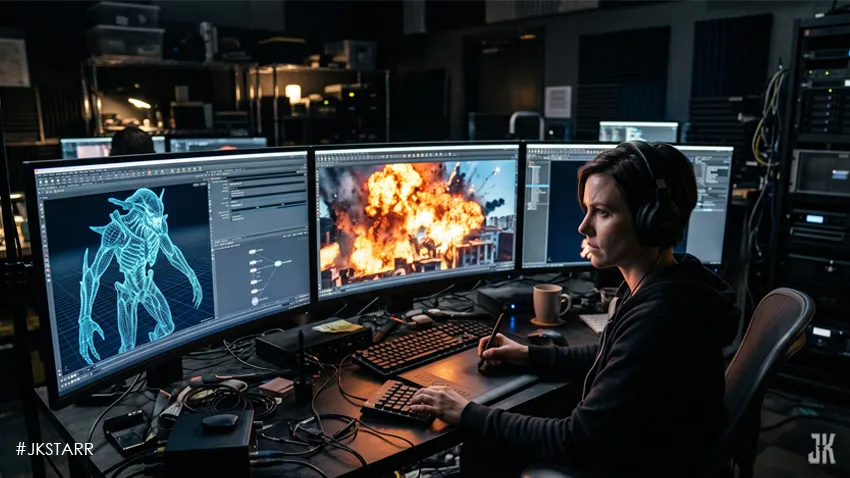
Whenever we watch a blockbuster movie or a sci-fi streaming series featuring a massive explosion, a terrifying alien monster, or an entire city collapsing in a matter of seconds, one common question crosses our minds—was that actually shot in real life?
The short answer is: Absolutely not! In modern filmmaking, these grand spectacles are created safely and brilliantly using VFX (Visual Effects). Gone are the days when filmmakers had to rely entirely on dangerous practical explosives and fragile miniatures. Today, technology allows artists to bring almost anything they can imagine to life on screen.
Let's dive deep into a step-by-step breakdown of how VFX artists create these breathtaking visual elements.
Table of Contents
🎬 What Is VFX Destruction?
VFX destruction refers to digitally creating or enhancing damage, chaos, and large-scale disasters that would be far too dangerous, expensive, or impossible to film practically. This includes:
- Massive bomb blasts and fiery explosions 💣
- Alien invasions and sci-fi space attacks 👽
- Terrifying monsters and mythical beasts stepping into frame 🐲
- City destruction and crumbling skyscrapers 🏙️
- Collapsing bridges and high-speed vehicular crashes 🌉
- Natural disasters like tsunamis, massive earthquakes, and raging wildfires 🌊🔥
Instead of risking lives, property, or the environment, filmmakers utilize advanced computer graphics and physics-based software to simulate these events down to the last molecule.
📜 The Evolution of VFX: From History to the Modern Era
Visual effects are not entirely new; they date back to the early 20th century when pioneer Georges Méliès used simple camera tricks. However, the game changed forever with the release of Jurassic Park (1993), which proved that computer-generated imagery (CGI) could look completely convincing. Today, iconic films like Avatar, Avengers: Endgame, and Interstellar demonstrate that VFX is no longer just an extra tool—it is a core pillar of modern storytelling.
⚙️ How a VFX Shot is Made (The VFX Pipeline)
To bring a complex VFX sequence to the big screen, studios follow a structured workflow divided into three main stages:
- Pre-Production (Planning): Storyboards, concept art, and blocking out the sequence layout.
- Production (Shooting): Actors perform on a green screen stage while tracking markers help camera crews map exact angles.
- Post-Production (VFX & Compositing): This is where the magic happens. 3D assets, fluid simulations, lighting passes, and final color grading are blended together.
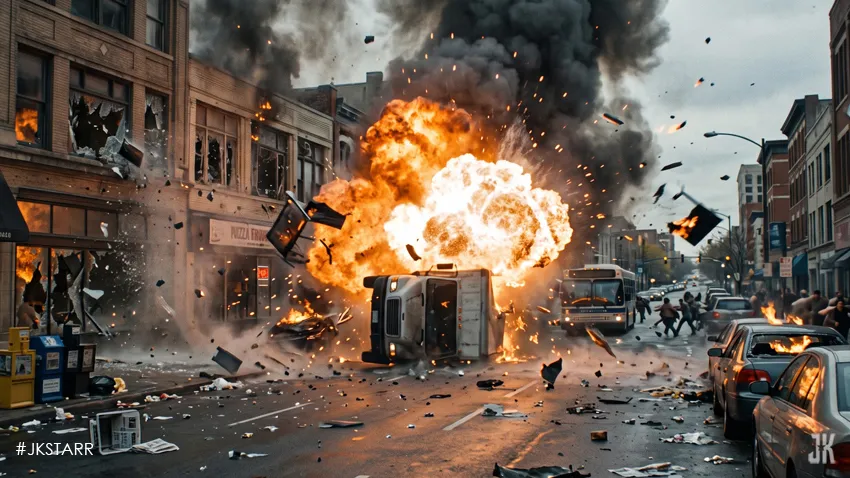
Cinematic VFX explosion simulation with flying debris and fire physics in movies
💥 How Explosions Are Created in VFX
- Reference Collection: Artists study real-world reference footage—analyzing flame behavior 🔥, smoke dispersion 🌫️, debris projection 🧱, and sudden shockwaves 💨.
- Physics Simulations: Modern software calculates gas expansion, temperature shifts, and flame propagation to mimic true physics.
- Debris & Dust Elements: Flying chunks of concrete, shattered glass, and rolling dust clouds are simulated to sell the impact.
- Lighting & Compositing: Explosions cast intense light onto their surroundings. Artists carefully adjust brightness ✨, color temperatures 🔶, and shadows to match the live-action plate.
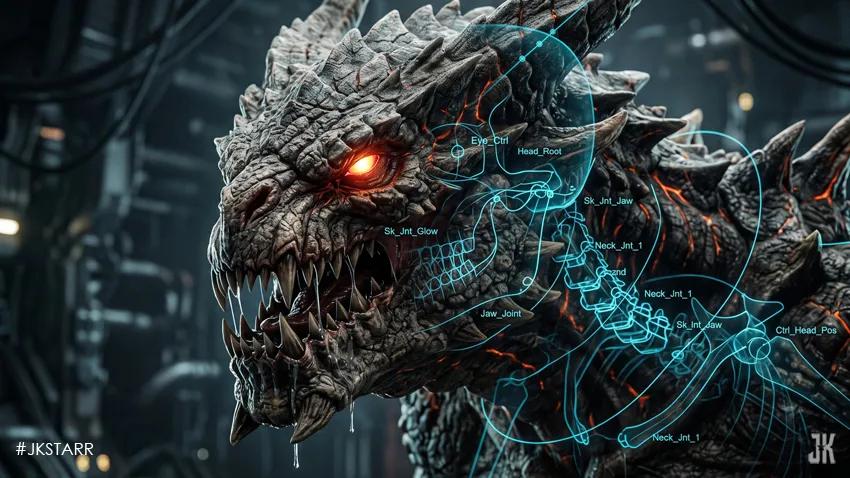
3D creature modeling, rigging, and texturing process for modern VFX movies
👹 How Creatures and Monsters Are Brought to Life
- Concept Art & Design: Designers draft the creature's overall anatomy, skin texture 🐊, scale, and distinct personality 😈.
- 3D Modeling: Digital sculptors build the creature in 3D, detailing muscles, bones, and skin folds.
- Rigging (Digital Skeleton): A virtual skeleton is embedded into the model to allow natural movement like walking, running, and facial expressions.
- Texturing and Skin Shading: Artists add realistic textures like scales, fur 🐻, wet surfaces, and subsurface scattering so light reacts credibly with the skin.
🌪️ How Large-Scale Destruction Scenes Are Simulated
Replicating collapsing buildings, crumbling roadways, and exploding vehicles requires robust digital environments. Objects are digitally fractured into thousands of pieces, allowing software to calculate gravity, mass, and structural weaknesses. Secondary elements like rolling dust, smoke, and camera shake 📹 are then layered on top to maximize cinematic impact.
🤖 The Role of Artificial Intelligence in Modern VFX
Artificial Intelligence (AI) has rapidly transformed the VFX landscape. Today, AI-powered tools assist artists by quickly generating background textures 🎨, predicting complex fluid physics 🧠, upscaling resolutions 📈, and drastically cutting down rendering times ⏱️.
🖥️ Industry-Standard VFX Software
Professional production houses and independent creators alike rely on industry-standard tools:
- 3D Modeling & Animation: Blender, Autodesk Maya, Cinema 4D
- Simulation Engines: Houdini (the gold standard for explosions and destruction)
- Compositing Tools: Nuke, Adobe After Effects
⚠️ Why Digital Effects Have Replaced Practical Effects
While practical effects still have a special place in cinema, digital effects are heavily preferred because they are:
- Safer: Zero risk of injury to actors or crew members ✅
- Cost-Effective: Eliminates the need to rebuild sets or buy expensive explosives repeatedly ✅
- Controllable: Directors can tweak, iterate, and modify scenes infinitely ✅
- Eco-Friendly: Reduces physical waste and carbon footprints 🌍
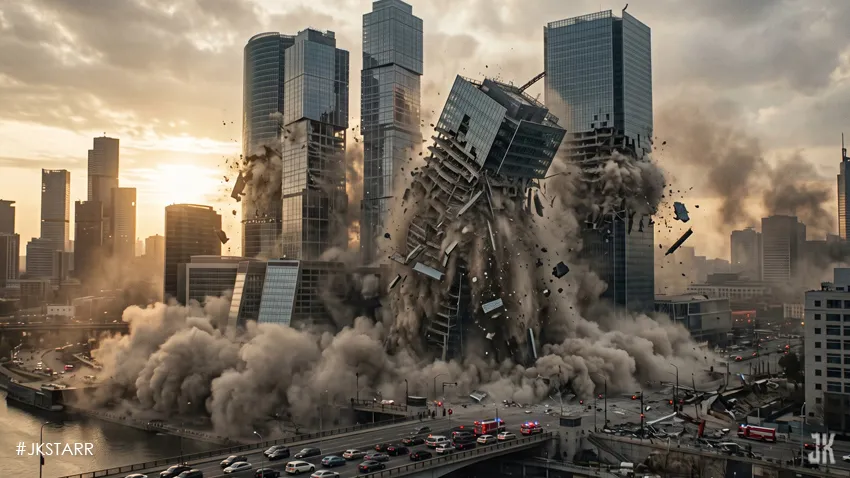
Large-scale city destruction and physics simulation in modern visual effects
🎯 Final Thoughts
The chaotic, jaw-dropping scenes we love in movies may look completely wild on screen, but they are the product of rigorous planning, math, physics, and profound artistic talent. Whether you are an aspiring filmmaker, a digital artist, or simply a passionate movie fan, understanding how these effects are built gives you a whole new appreciation for the magic of cinema.